
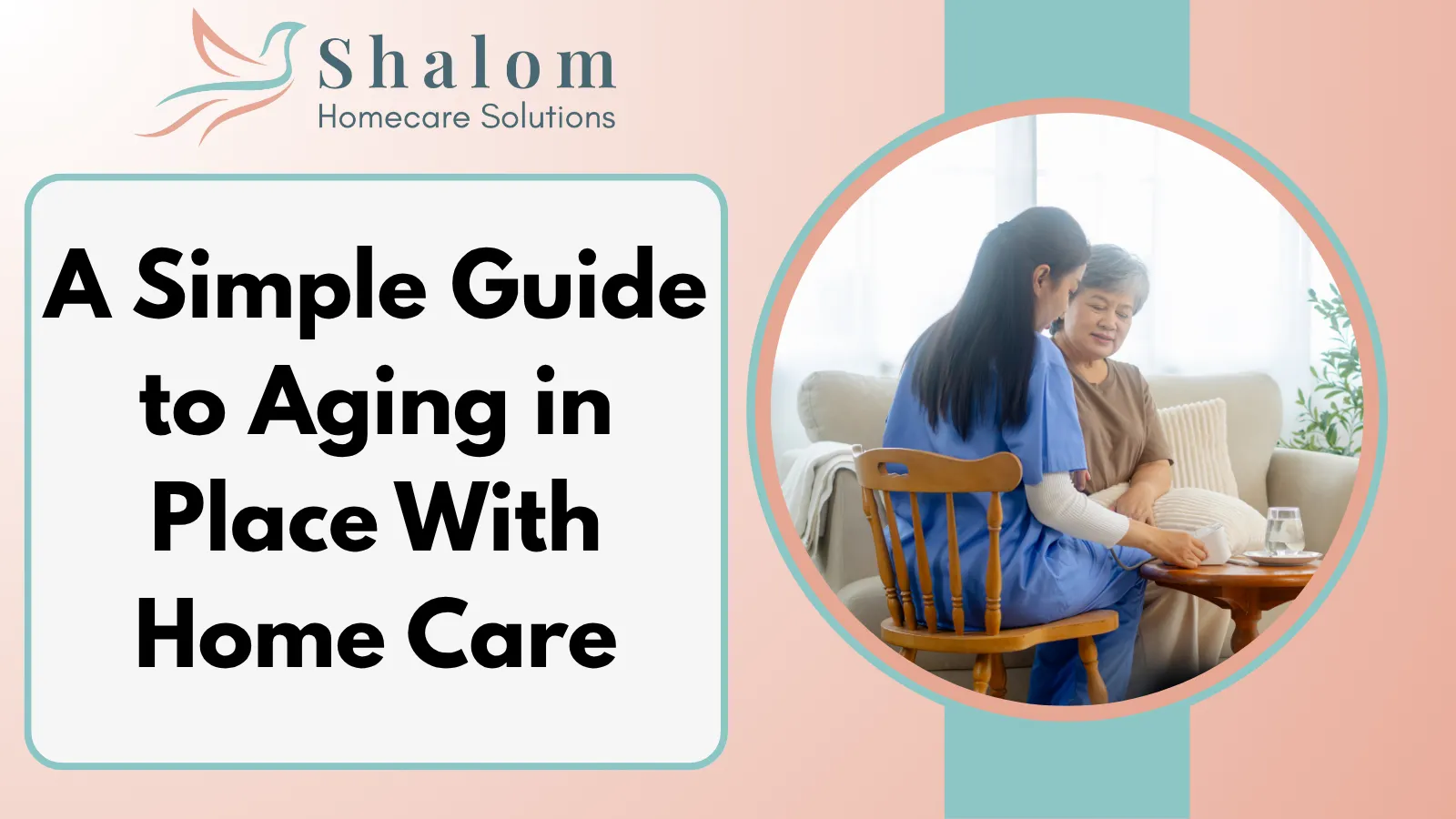
Aging in place with home care means staying in your own home as you grow older, supported by trained professionals who come to you. The right mix of services, from skilled nursing to therapy and personal care, can help you or your loved one live safely and comfortably without moving to a facility. The key is building a care plan that matches real needs today and adjusts as those needs change.
Most older adults want the same thing: to stay home. Your home holds your routines, your memories, and your independence. Choosing aging in place with home care is not a compromise. It is a plan that puts you in control of where and how you live.
At Shalom Homecare Solutions, based at 5510 Cherokee Avenue, Alexandria, VA 22312, we understand that every family’s situation is different. Some people need a few hours of help each week. Others need daily skilled nursing or therapy. This guide walks you through what aging in place actually looks like, what services support it, and how to get started. You can reach our team any time at (703) 459-9545.
What Aging in Place With Home Care Really Means
Aging in place is the choice to remain in your own home rather than moving to a nursing facility or assisted living community. Home care makes that choice realistic. It brings professional support directly to your door, on a schedule that works for you.
Home care is not one single service. It is a collection of options. Some are medical, such as skilled nursing or physical therapy. Others are non-medical, such as help with bathing, meals, or light housekeeping. The right combination depends on your health, your home, and what tasks have become difficult.
- Skilled nursing for wound care, medication management, and health monitoring
- Physical therapy to rebuild strength and prevent falls
- Occupational therapy to adapt daily tasks and the home environment
- Speech therapy for communication or swallowing difficulties
- Home health aide services for personal care and daily routines
- Patient care aides for non-medical support throughout the day
How to Know When Home Care Is the Right Step
Families often wonder whether they are overreacting or waiting too long. A few clear signs suggest it is time to look at home care. These include missed medications, unexplained weight loss, difficulty bathing or dressing, a recent fall, or a new diagnosis that requires monitoring.
You do not have to wait for a crisis. Starting with a smaller level of support, such as a home health aide a few days a week, can prevent bigger problems later. We understand that the conversation about needing help can feel hard. Framing it as a practical step, not a loss of independence, makes it easier for everyone.
- A hospital or rehab discharge that requires follow-up care at home
- A chronic condition like diabetes, heart failure, or COPD that needs regular monitoring
- Increasing difficulty with activities of daily living such as bathing, dressing, or cooking
- Recent falls or a significant fear of falling
- A family caregiver who needs consistent, reliable backup support
Building a Home Care Plan That Actually Works
A good home care plan starts with an honest assessment. What can the person do safely on their own? What tasks are becoming risky? What does a typical day look like? Answering these questions helps a care coordinator match the right services to the real situation.
Plans should be flexible. Needs change after a health event, a season change, or simply over time. A plan built around today’s needs, with room to adjust, is far more useful than one that assumes things will stay the same. Ask your provider how often the plan gets reviewed and who you call when something changes.
The Role of Skilled Nursing and Therapy in Aging in Place
Many people assume skilled services such as nursing or therapy only happen in a clinic or hospital. That is not true. Skilled nursing can come to your home to manage wound care, monitor vital signs, administer medications, or educate you about a new diagnosis. This level of clinical support can prevent unnecessary hospitalizations and give families genuine peace of mind.
Physical therapy helps seniors regain strength, improve balance, and recover after surgery or illness, all without leaving home. Occupational therapy helps adapt daily tasks and, when needed, recommends changes to the home itself, such as grab bars or rearranged furniture, so the space works with your body rather than against it. You can learn more on our physical therapy page and our occupational therapy page.
Taking the First Steps Toward Home Care in Alexandria, VA
Getting started is simpler than most families expect. A phone call or referral form is usually all it takes to begin. A care coordinator will talk with you about current needs, insurance coverage, and timing. This is general information, not financial or medical advice. For specifics about what your insurance or Medicare plan covers, confirm directly with your plan or physician.
Shalom Homecare Solutions serves Alexandria, VA and surrounding areas including Fairfax, Arlington, Falls Church, and beyond. Whether the need is skilled nursing, therapy, home health aide services, or patient care aides, our team is ready to help you build a plan that keeps your loved one safe at home. Call us at (703) 459-9545 or visit our office at 5510 Cherokee Avenue, Alexandria, VA 22312 to get started.
Frequently Asked Questions
What is the difference between skilled and non-skilled home care?
Skilled home care is provided by licensed professionals such as nurses or therapists and addresses medical needs. Non-skilled home care covers personal support tasks such as bathing, dressing, and meal preparation and does not require a clinical license.
Does Medicare cover aging in place with home care?
Medicare may cover certain skilled home health services if you meet eligibility criteria, including being homebound and having a doctor’s order. This is general information, not advice. Confirm your specific coverage with your Medicare plan or physician.
How many hours of home care does a senior typically need?
It varies widely depending on health status, living situation, and available family support. Some people need a few hours a few days a week, while others benefit from daily or around-the-clock assistance.
Can home care services change over time?
Yes. A good care plan is reviewed regularly and adjusted as needs evolve. After a hospitalization, surgery, or change in health, services can be added, reduced, or changed to match the new situation.
How do I start home care services with Shalom Homecare Solutions?
You can call (703) 459-9545 or complete a referral form to begin. A care coordinator will walk you through the assessment process and help identify which services are the right fit.